
Breaking into the modeling industry requires talent, dedication, and the right marketing tools to get noticed by agencies and clients. One of the most fundamental and powerful tools in your arsenal is the composite card, and finding a high-quality model comp card template free of charge can be a game-changer for aspiring models on a budget. This simple yet crucial piece of marketing material acts as your professional business card and mini-portfolio, all rolled into one. It's often the very first impression you make, left behind after a casting call or sent digitally to a potential agent.
A well-designed comp card, also known as a zed card or sed card, instantly communicates your look, versatility, and essential statistics to industry professionals. It's a standardized format that casting directors, photographers, and brand managers are familiar with, allowing them to quickly assess if you're the right fit for their project. Without one, you risk appearing unprofessional and unprepared, significantly hindering your chances of landing a callback or getting signed.
The challenge, however, is creating a card that looks polished and professional without incurring the high costs of a graphic designer. This is where templates become invaluable. They provide the industry-standard structure, ensuring you include all the necessary information in a clean, visually appealing layout. This guide will walk you through everything you need to know, from understanding the core components of a comp card to finding and customizing the perfect free template to launch your modeling career.
What is a Model Comp Card?
A model comp card is your ultimate marketing tool, serving as a condensed version of your portfolio. Think of it as a professional calling card designed specifically for the modeling industry. Its primary purpose is to provide a quick, comprehensive snapshot of who you are as a model. When you attend a casting or meet with an agent, you leave this card behind, ensuring they have a physical or digital reminder of your look, range, and key measurements.
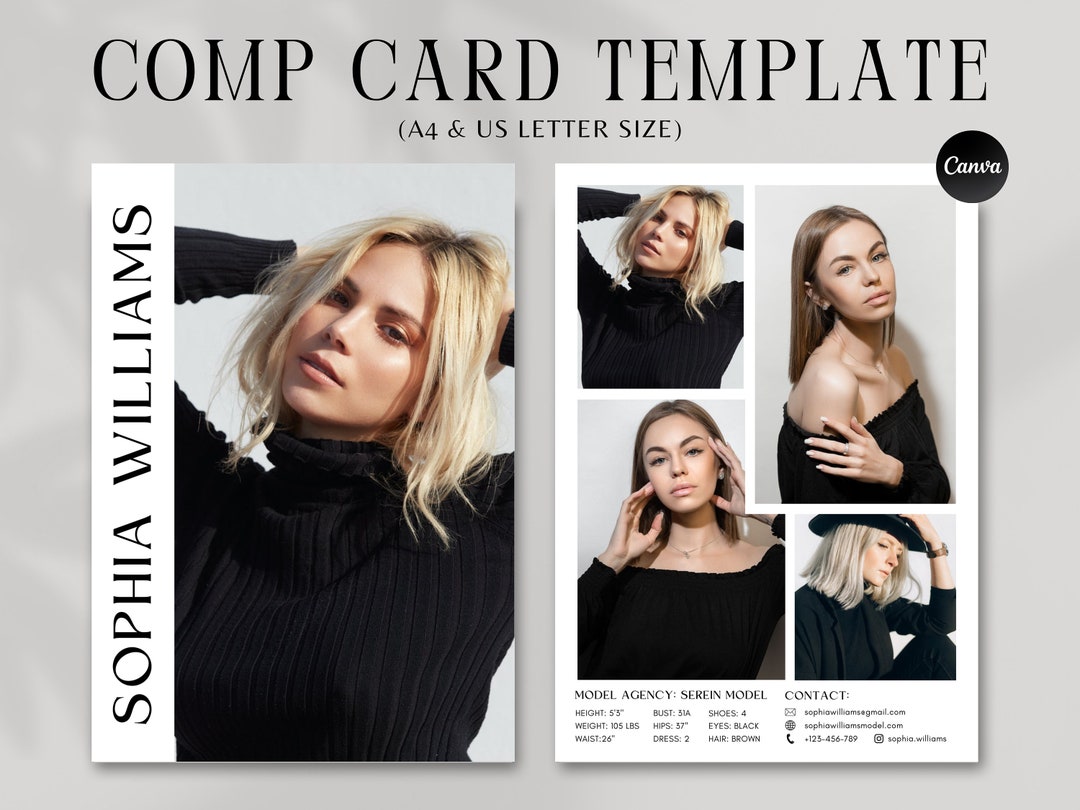
The standard format is typically a two-sided card, often sized at A5 (5.8 x 8.3 inches) or the American equivalent of 8.5 x 5.5 inches. The front is almost always dedicated to your single best headshot, prominently featuring your name. This image is your hook—it needs to be striking, professional, and a clear representation of your primary modeling type. It's the photo that makes a casting director pause and want to see more.
The back of the card showcases your versatility. It usually features a series of three to five smaller images that display your range. This is where you include a full-body shot, a profile or three-quarter shot, and perhaps a more commercial, smiling photo or an editorial-style image. Alongside these photos, the back also lists your vital statistics and contact information. This combination of powerful imagery and essential data makes the comp card an indispensable asset for every working model.

Why Every Model Needs a Professional Comp Card
In the competitive world of modeling, first impressions are everything. A professional comp card is not just a suggestion; it's an industry-standard requirement that signals you are serious about your career. Arriving at a go-see or agency meeting without one can immediately position you as an amateur.
It's Your Industry Business Card
Casting directors see hundreds, sometimes thousands, of models for a single job. A comp card is a tangible takeaway that keeps you in their minds long after you've left the room. It's an easy-to-file, easy-to-reference tool that they can pull out when making final decisions. A digital version is equally important for online submissions, serving the same purpose in a crowded inbox.

It Showcases Your Versatility Instantly
Your portfolio book shows your depth, but a comp card shows your range at a glance. In less than ten seconds, a client can see your headshot, your full-body physique, your profile, and your ability to convey different moods. This quick-glance efficiency is crucial for busy professionals who need to make swift casting decisions.
It Provides All Essential Information
A great look is only part of the equation. Clients need to know if you fit the wardrobe or meet specific height requirements for a runway show. Your comp card provides all the necessary stats—height, bust, waist, hips, shoe size, hair color, and eye color—in a clear, standardized format. Having this information readily available saves time and prevents miscommunication.

The Anatomy of a Killer Comp Card
A successful comp card is a perfect balance of stunning visuals and clear, concise information. Every element has a purpose and should be carefully selected to present the best possible version of your professional self. Using a template can help ensure you don't miss any of these critical components.
The Headshot: Your Main Image
This is the most important photo on your comp card and occupies the entire front. It should be a high-quality, professional photograph where you make direct eye contact with the camera. Your face should be clearly visible, with clean, natural-looking makeup and simple styling. This image must define your brand—whether that's commercial, high-fashion, fitness, or another niche. It's the picture that sells your potential.
The Supporting Photos
The back of the card is where you demonstrate your range. You should include a curated selection of 3-5 images that highlight your versatility. A standard combination includes:
* A Full-Body Shot: This is non-negotiable. It shows clients your body proportions and how you carry yourself. It's often a swimwear or fitness wear shot for that market, or a well-fitted fashion look for others.
* A Three-Quarter Shot: This is a great way to showcase your physique and posing ability from a different angle.
* A Profile or Side Shot: This highlights your facial structure and is particularly important for beauty or commercial work.
* An "Optional" Shot: This could be a commercial shot with a big smile, a dramatic editorial image, or an action shot, depending on the type of work you're seeking.
The key is to select photos that are different from one another but still create a cohesive, professional presentation.
Your Vital Statistics
Accuracy is paramount when listing your measurements. Do not guess or fudge the numbers, as you will be measured at fittings. This information should be easy to read and typically includes:
* Height
* Bust (or Chest for men)
* Waist
* Hips
* Dress Size
* Shoe Size
* Hair Color
* Eye Color
Contact Information
This section is straightforward but crucial. If you are represented by an agency, you must list your agency's name, logo, phone number, and contact information. Do not put your personal information on the card. If you are a freelance model seeking representation, you would include your professional name, a professional email address, and a reliable phone number.

How to Find and Use a Model Comp Card Template Free
Creating a professional-looking comp card doesn't have to be expensive. Thanks to modern design platforms, it's easier than ever to find and customize a model comp card template free of charge, giving you a high-end look without the designer price tag.

Where to Find Quality Templates
The internet is full of resources, but you'll want to choose a platform that offers high-quality, easily customizable options.
* Canva: This is perhaps the most popular and user-friendly option. Canva offers a vast library of free templates specifically designed for model comp cards. You can easily search for "comp card," choose a layout you like, and drag-and-drop your photos and text into place.
* Adobe Express (formerly Adobe Spark): Similar to Canva, Adobe Express provides a range of professionally designed templates that are free to use and customize. It's another excellent choice for those without advanced graphic design skills.
* Graphic Design Blogs & Websites: Some blogs and websites dedicated to the modeling or photography industries offer free template downloads in formats like PSD (for Photoshop) or AI (for Illustrator). This is a great option if you have access to and are familiar with Adobe's software.
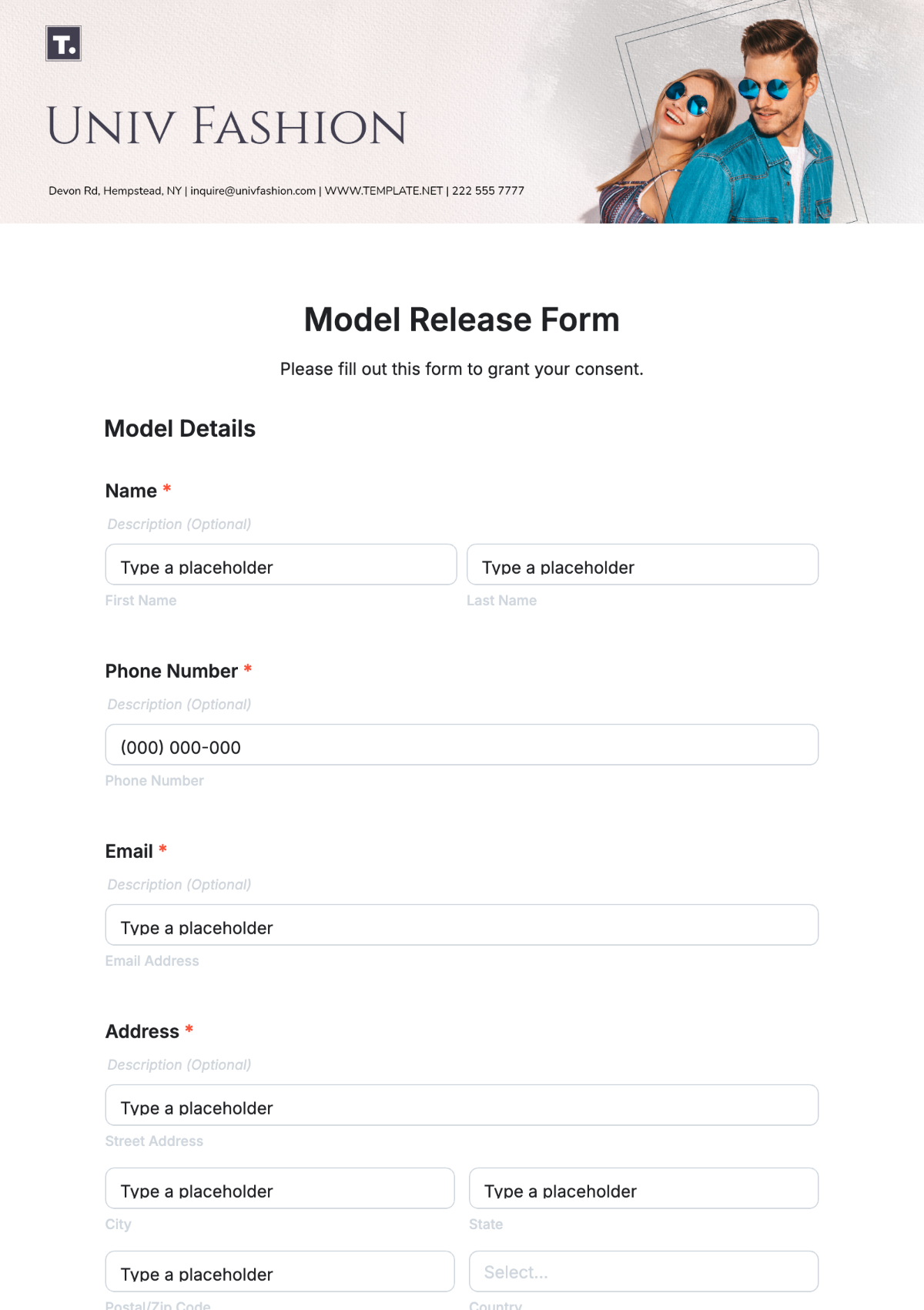
When selecting a template, look for clean lines, a simple layout, and a design that doesn't overshadow your photos. The best templates are minimalist, ensuring the focus remains entirely on you.

Customizing Your Free Template
Once you've chosen a template, the customization process is key.
1. Select Your Best Photos: Gather your high-resolution professional photos. Make sure you have a killer headshot and a variety of strong supporting images.
2. Upload and Place Your Images: Follow the platform's instructions to upload your photos. Drag your main headshot into the primary slot on the front and arrange your supporting images on the back. Pay attention to the flow and balance of the layout.
3. Input Your Information: Carefully type in your professional name, measurements, and contact details. Use a clean, legible font like Helvetica, Arial, or Times New Roman. Avoid overly decorative or script fonts that can be hard to read.
4. Review and Proofread: Triple-check every single detail. Ensure there are no typos in your name, measurements, or contact info. A simple mistake can make you look careless.
5. Download in the Right Format: For printing, download your final design as a high-quality PDF (Print) file. For digital submissions via email or online, a high-resolution JPEG or PNG is usually best.

Essential Tips for Creating a Standout Comp Card
A template provides the foundation, but the quality of your content is what will make your comp card truly effective. Follow these professional tips to ensure your card gets you noticed for all the right reasons.
Invest in Professional Photography
This is the single most important investment you can make in your modeling career. Your comp card is only as good as the photos on it. iPhone selfies, vacation snapshots, or photos taken by an amateur friend will not cut it. Hire a professional photographer who specializes in model portfolios. They will understand the lighting, posing, and types of shots needed to build a compelling card.
Keep it Clean and Simple
Less is more. The purpose of the comp card is to showcase you, not the graphic designer's skills. Stick to a minimalist design with a white, black, or gray background. The text should be simple and easy to read. Avoid cluttered layouts, distracting patterns, or loud colors. Professionalism is conveyed through simplicity and quality.
Show Your Versatility, Not Your Vacation
Every photo on your card should serve a purpose. Select images that display your range as a model. Show a great smile for commercial work, a serious or edgy look for fashion, and a strong body shot for fitness or swimwear. Ensure the photos look like they belong in a professional portfolio. Avoid busy backgrounds, other people in the shot, or distracting props unless it's part of a well-executed professional photoshoot.
Proofread Everything
We've said it before, but it bears repeating. A typo in your contact information could cost you a job. An incorrect measurement will get you sent home from a fitting. Read over every word and number on your card. Then, have a trusted friend or family member proofread it as well. A fresh pair of eyes can often catch mistakes you've overlooked.
Digital vs. Physical Comp Cards: What You Need to Know
In today's industry, you absolutely need both a physical and a digital version of your comp card. Each serves a distinct but equally important purpose in your marketing strategy.
The Power of a Physical Card
There is still immense value in a tangible, professionally printed comp card. When you attend an in-person casting, go-see, or a networking event, leaving a physical card ensures you won't be forgotten. It's a professional gesture that allows casting directors to keep your information in a physical file for current and future projects. Always have a small stack of pristine cards with you in your model bag. When printing, opt for a sturdy cardstock with a matte or semi-gloss finish for a high-quality feel.
The Convenience of a Digital Card
The digital comp card is your go-to for online submissions. Agencies and clients often request digital submissions first, and you need a file that is easy to email and view. A high-resolution JPEG or a compressed PDF works perfectly. You can also feature your digital comp card on your online portfolio website or link to it from your professional social media profiles. It allows for quick, widespread distribution to contacts anywhere in the world.
Conclusion
A professional model comp card is an non-negotiable tool for anyone serious about a career in modeling. It is your introduction, your business card, and your mini-portfolio, all condensed into one powerful marketing piece. It communicates your look, professionalism, and potential to the people who can hire you. While the cost of a professional designer can be a barrier, utilizing a model comp card template free from a reputable online platform is an intelligent and effective solution.
By focusing on the essentials—investing in high-quality professional photography, selecting images that showcase your range, ensuring all your statistics are accurate, and maintaining a clean, simple design—you can create a comp card that rivals those of established models. Remember to have both printed and digital versions ready at all times. With a standout comp card in hand, you are well-equipped to make a lasting impression and take the next confident step forward in your modeling journey.
0 Response to "Pro Model Comp Card Template Free"
Posting Komentar